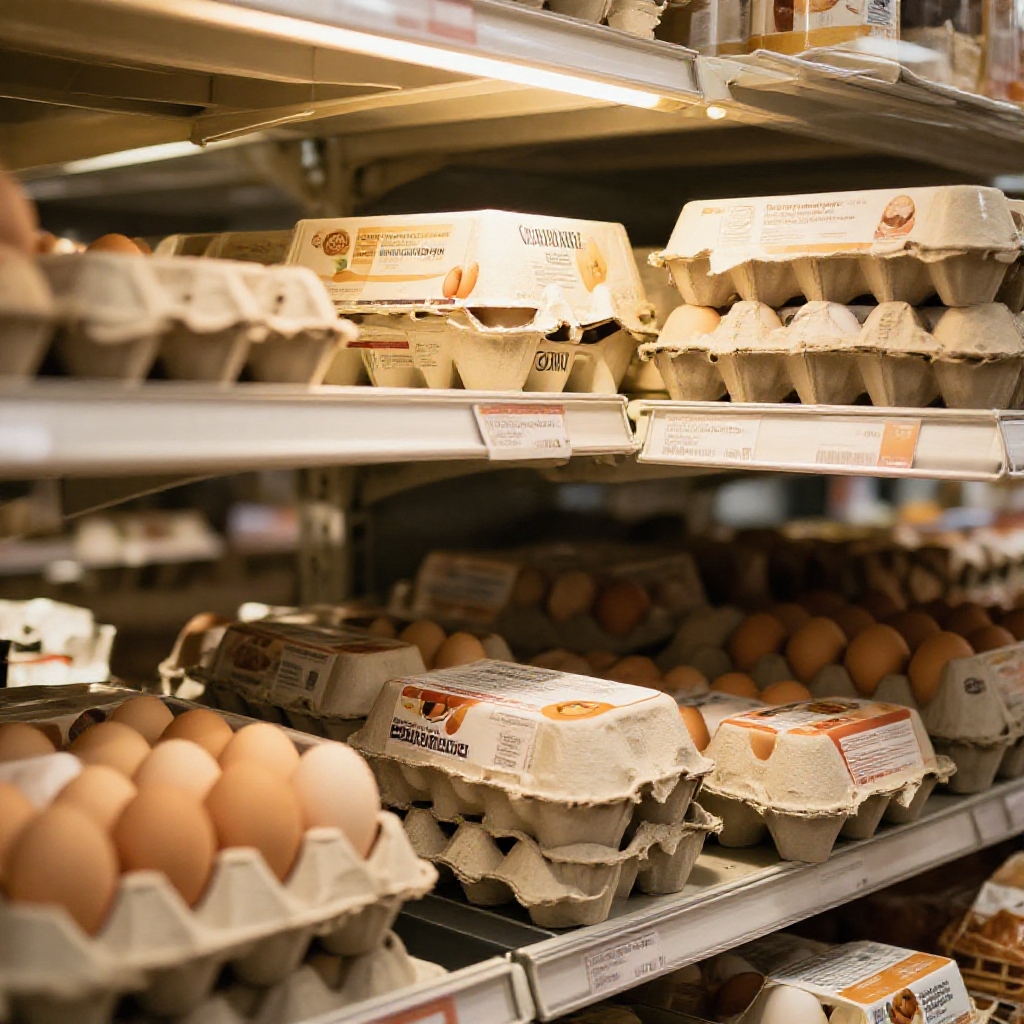
Free-range. Cage-free. Pasture-raised. Natural. Omega-3 enriched. The average egg carton has more marketing copy than a startup pitch deck. Here's what every label actually means — and which ones you can safely ignore.
Walk into any grocery store and stand in front of the egg section for sixty seconds. You will be confronted with a wall of cardboard cartons making competing moral claims about the chickens that laid them. Cage-free. Free-range. Pasture-raised. Humanely raised. Certified Humane. Animal Welfare Approved. Vegetarian-fed. Omega-3 enriched. Farm fresh. All natural.
That last one — "all natural" — is on a product that came out of a chicken. Every egg is natural. The label means nothing. And it's not the only one.
Here's a plain-English breakdown of what every label on an egg carton actually means, what's legally required, and what's designed to make you feel good while you pay an extra two dollars.
## The Ones That Are Regulated (Sort Of)
**Cage-Free**
USDA-regulated. Means the chickens are not kept in battery cages — those are the wire boxes so small a bird can't spread its wings, which were the industry standard for decades. Cage-free chickens live in open barns. They can walk around and flap. What cage-free *doesn't* mean: access to outdoors. A cage-free flock of 200,000 birds can spend their entire lives inside a windowless warehouse and legally wear this label.
Better than caged? Yes. Better than you're probably imagining when you picture "cage-free"? Significantly less so.
**Free-Range**
Also USDA-regulated. Requires that chickens have "access to the outdoors." The USDA defines "access" very loosely — a small door at one end of an enormous barn qualifies. Most free-range hens never actually go outside. The door exists; the conditions to actually use it often don't.
The gap between the label and the image it conjures is large. A bird scratching in the sun is free-range. A bird in an overcrowded barn with a door to a concrete patio it never reaches is also free-range.
**Pasture-Raised**
No federal USDA standard. But this is the one that actually matters, because third-party certifications fill the gap. Look for "Certified Humane Pasture-Raised" or "Animal Welfare Approved" alongside it. These require a minimum of 108 square feet of outdoor pasture *per bird*, year-round access, and meaningful time outside.
This is what most people are picturing when they buy the cage-free carton. It costs more — usually $6–$8 a dozen — because it actually requires land, weather management, and lower flock density. If you care about animal welfare and egg quality, this is the label to buy.
## The Ones That Sound Official But Aren't
**Humanely Raised / Humanely Handled**
No federal regulation. No required standard. Any producer can print this on a carton without any third-party audit or certification. It means whatever the marketing department decided it means.
**Natural / All Natural**
Legally required to mean "minimally processed and containing no artificial ingredients." In practice, it means nothing on an egg carton — eggs are already minimally processed, and the USDA doesn't regulate this claim in a meaningful way on shell eggs. File under: designed to make you feel good.
**Farm Fresh**
Not regulated. Technically accurate for any egg that touched a farm at some point.
## The Certifications That Actually Mean Something
These are third-party labels run by non-profit organizations with actual auditing and real standards:
- **Certified Humane** — Third-party audited by Humane Farm Animal Care. Sets specific requirements on space, enrichment, and outdoor access depending on the tier (cage-free, free-range, or pasture-raised). The pasture-raised tier requires 108 sq ft per bird.
- **Animal Welfare Approved (AWA)** — Run by A Greener World, widely considered the most rigorous welfare standard. Family farms only, full outdoor access required, beak trimming prohibited.
- **Global Animal Partnership (GAP)** — Tiered certification (1–5+) used by Whole Foods. Step 4 and above require meaningful outdoor access.
If you see one of these alongside a housing claim, the claim has teeth. Without a third-party certification, you are trusting the carton.
## Does Any of This Affect the Egg?
Somewhat. Pasture-raised eggs from hens that eat grass and bugs have measurably higher omega-3 fatty acids, vitamin E, and beta-carotene than conventional eggs. Studies vary on the magnitude, but the nutritional difference is real and correlates with actual outdoor access and diet diversity — not just the label.
Yolk color is a proxy, not a guarantee. Darker yolks suggest a more varied diet. But yolk color can be manipulated with feed additives like marigold extract, so a bright orange yolk on a cage-free egg may just mean the producer added xanthophylls to the feed. Corn-fed hens produce pale yolks regardless of housing.
The short version: if you're buying eggs primarily for nutrition and can afford to, pasture-raised with a third-party certification is the best combination. If you're buying for flavor, the same applies. If budget is the constraint, cage-free is a meaningful step up from conventional. And if you see "all natural" or "humanely raised" without certification, you can stop paying the premium — you're buying a story, not a standard.
## The Bottom Line
The egg carton is a marketing document first. The actual conditions chickens live in are determined by certifications and housing standards, not by the adjectives on the box. Know the four labels that matter — cage-free, free-range, pasture-raised, and the certifications that verify them — and tune out the rest.
The chicken, for her part, has no opinion on your purchase. But she probably has opinions about the barn.