## Why It Works
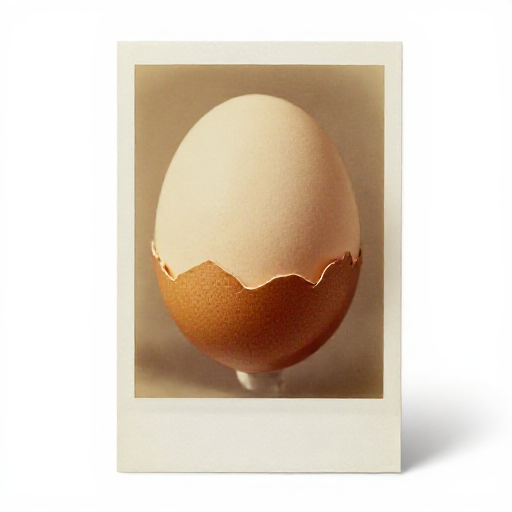
Egg white (albumen) is a stable, transparent protein solution that adheres uniformly to paper and holds other compounds in suspension as it dries. When photographers discovered that albumen could suspend silver nitrate salts in a thin, even layer on paper, it solved one of the key problems of early photography: getting the light-sensitive chemicals to bond to the printing paper without soaking in or running unevenly.
## The Full Story
The albumen printing process was patented in 1850 by Louis Désiré Blanquart-Evrard. The method: paper was coated with a layer of egg white mixed with ammonium chloride (or sodium chloride), then dried. Before printing, the coated paper was floated on a solution of silver nitrate, which reacted with the chloride in the albumen to form light-sensitive silver chloride trapped in the protein matrix. When exposed under a glass negative in sunlight, the silver chloride reduced to metallic silver, creating a warm-toned print with fine detail.
The process dominated photography for roughly 40 years. At its peak in the 1860s and 1870s, photographic printing studios consumed millions of eggs per year — factories existed solely to separate whites from yolks for photographic use, with the yolks sold as a byproduct for other uses. German factories reportedly processed 60,000 eggs per day.
The prints are recognizable today: warm sepia to purple-brown tones, high detail, smooth gradients, often mounted on thick card stock as cartes de visite or cabinet cards. Their characteristic yellowing and fading over time is caused by deterioration of the albumen layer and silver image — but well-kept examples from the 1860s remain sharp and detailed 160 years later.
## Pro Tips
- Museums and archives use the distinctive warm tone and surface sheen of albumen prints to identify them from other 19th-century photographic processes.
- Albumen printing is still practiced by contemporary alternative process photographers. Kits and instructions are available from specialty photographic suppliers.
- The process is contact-printing only — no enlargers. The negative must be the same size as the final print.
## When to Use This
Historical knowledge for anyone interested in photography, art history, or Victorian material culture. And a remarkable reminder that the protein in eggs is versatile enough to have helped create billions of lasting historical documents.