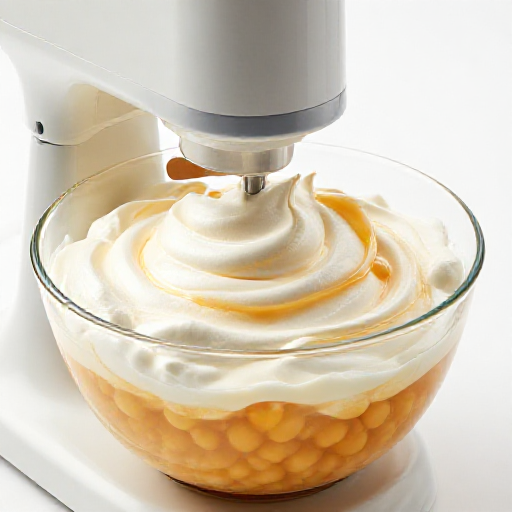
## Why It Works
Aquafaba contains proteins, starches, and saponins leached from chickpeas during the canning process. Saponins are natural surfactants — they reduce surface tension of the liquid and allow air bubbles to form and stabilize when whipped, just as the proteins in egg white do. The resulting foam is structurally similar to whipped egg white and behaves the same way in recipes: it holds peaks, bakes into a stable meringue, and folds into mousse without collapsing.
## How to Do It
1. Open a can of unsalted chickpeas. Drain the liquid into a bowl — this is your aquafaba.
2. For best results, reduce the liquid slightly by simmering in a small saucepan for 5 to 10 minutes until it's slightly thicker. Let cool completely.
3. Use 3 tablespoons per egg white being replaced.
4. Add cream of tartar (1/8 tsp per 3 tbsp aquafaba) to stabilize the foam.
5. Whip with an electric mixer starting on low, then increasing to high. Takes 3 to 5 minutes to reach stiff peaks — longer than egg whites.
6. Use immediately in your recipe.
## Pro Tips
- Aquafaba meringues take longer to bake and dry out than egg white meringues. Add 10 to 15 minutes to your baking time and leave them in the turned-off oven to dry.
- The chickpea flavor is genuinely undetectable in finished baked goods. Even skeptics can't identify it blind.
- Aquafaba mousse sets slightly softer than egg white mousse. For a firmer result, add a small amount of melted dark chocolate, which sets as it cools.
## When to Use This
Vegan meringues, macarons, mousses, and any recipe where the goal is a stable, airy foam. Also useful when you have separated yolks from a recipe and don't want to waste the whites — but you've already used all your whites and need more for another component.