## Why It Works
When you crack an egg on a bowl edge, you're applying force to a small curved point. The shell bends inward before it breaks, pushing fragments into the interior. A flat surface distributes the impact across a line, creating a single clean fracture along the equator of the egg. The shell splits outward, away from the contents. Physics is on your side.
## How to Do It
1. Hold the egg firmly in one hand, wrapped around the middle.
2. Bring it down sharply against the edge of a counter or cutting board — a quick, confident tap, not a timid one. Hesitation produces a dented shell instead of a clean crack.
3. Find the fracture line that formed. Place both thumbs on either side of it.
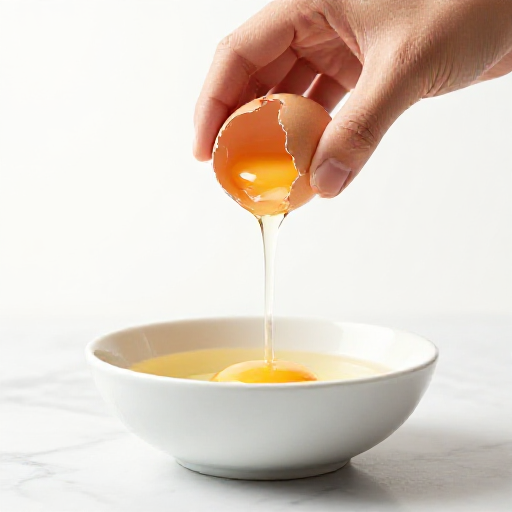
4. Pull the two halves apart over your bowl, angling the opening downward.
5. If the egg doesn't crack cleanly on the first tap, hit it slightly harder in the same spot. Don't move to a different location on the shell.
## Pro Tips
- One sharp tap beats multiple light ones. Repeated tapping creates multiple fracture lines, which is exactly how you get shell pieces in the bowl.
- If you're cracking into a hot pan, do it against the counter first, then split over the pan — same principle, faster execution.
- Once you switch to flat-surface cracking you will never go back. The muscle memory takes about a dozen eggs to build.
## When to Use This
Every single time you crack an egg. This is not a situational hack — it's the correct technique, full stop. It matters most when you're cracking into a finished batter or sauce where fishing out shell fragments is annoying, or when cracking into a hot pan where you can't easily retrieve a fragment once it's there.