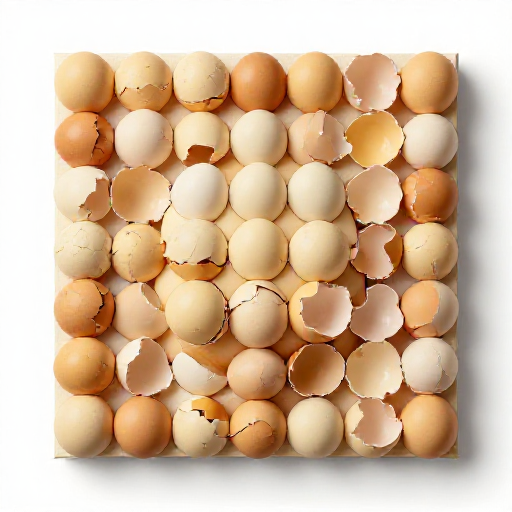
## Why It Works
Eggshell is a naturally occurring material with organic irregularity — no two pieces are quite the same shape, and the curved surface creates dimension even when glued flat. The matte finish of plain shell contrasts beautifully with paint, and the shell accepts dye readily because of its porous calcium carbonate structure. Large-scale eggshell mosaics have been used in traditional Vietnamese lacquerware and folk art for centuries.
## How to Do It
1. Collect shells over time. Rinse each one to remove egg residue and air dry completely.
2. To dye: mix food coloring with a small amount of water. Submerge shell pieces for 10 to 30 minutes, then let dry on paper towels.
3. Crush shells into irregular pieces of roughly the size you want. For large mosaics, leave them bigger. For fine detail, crush smaller.
4. Sketch your design lightly on cardboard, canvas, or wood panel.
5. Apply white craft glue (PVA) to a small section at a time.
6. Press shell pieces into the glue, fitting them together loosely like a mosaic. Leave small gaps for the dark background to show through as grout lines, or fill tightly.
7. Let dry completely — at least an hour.
8. Apply paint over the shell surface if desired, wiping back to reveal the shell texture beneath.
9. Seal the finished piece with matte or glossy Mod Podge.
## Pro Tips
- Curved shells catch light differently depending on orientation — experiment with which side faces up for the texture you want.
- For a grout effect: after the shells are set and dry, mix a small amount of white grout or plaster and press into the gaps, then wipe clean.
- This is a great project for broken shells you'd otherwise discard — no need for perfect halves.
## When to Use This
Art projects, home decor, framing pieces, picture frames, plant pots, and canvases. Works at any skill level — the organic irregularity of the shells covers a lot of imprecision.