## Why It Works
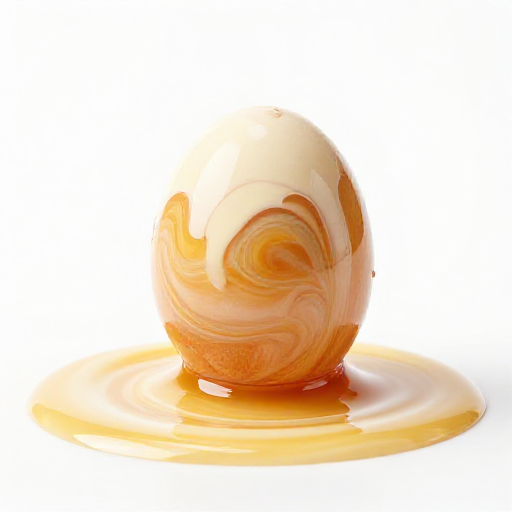
Nail polish contains resins and solvents with a density lower than water, so it floats on the surface rather than mixing in. When you drag a toothpick through it, the surface tension of the polish allows the color to move and swirl without sinking. When you roll an egg through the surface film, the polish adheres to the shell on contact and dries almost instantly as the solvents flash off. The result is a marbled pattern that wraps the entire egg.
## How to Do It
1. Hard-boil and cool your eggs. Dry them completely — water on the shell prevents adhesion.
2. Fill a disposable container (plastic cup or old bowl) with cold water to a depth of at least 3 inches.
3. Drop 2 to 4 drops of nail polish (one or multiple colors) onto the water surface. Work fast — polish starts to dry on the water within about 30 seconds.
4. Swirl lightly with a toothpick to create the pattern. One or two strokes is usually enough — overworking muddies the colors.
5. Hold the egg at both ends and roll it through the surface film in one smooth motion.
6. Lift out and let dry on a paper towel for 5 minutes.
7. Skim off any remaining polish from the water with the toothpick before the next egg.
## Pro Tips
- Glitter nail polish adds sparkle but clogs up quickly. Use it last.
- White or light-colored shells show the marbling much more clearly than brown shells.
- Acetone nail polish remover on a cotton ball will remove mistakes from the shell if needed, before the polish fully cures.
## When to Use This
Easter eggs, decorative display eggs, gifts, or any time you want a striking result with zero artistic skill required. The randomness is the point — you can't plan a bad result.