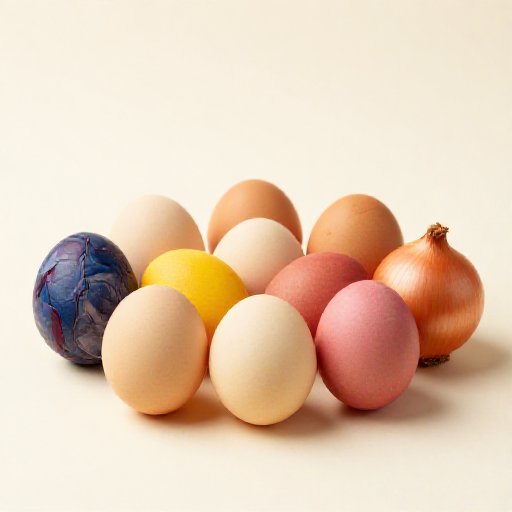
## Why It Works
Plant dyes contain pigment molecules (anthocyanins, curcumins, betalains) that bond to porous surfaces under heat. Eggshells are calcium carbonate — porous, mildly reactive, and excellent at absorbing color. Adding acid (vinegar) to the dye bath lowers pH, which helps pigment molecules bond more strongly to the shell surface. Simmering the eggs directly in the dye achieves deeper, more uniform color than a cold dye soak.
## How to Do It
**Red Cabbage (blue/purple):**
1. Chop half a head of red cabbage into rough pieces.
2. Cover with water (about 1 quart) and bring to a boil. Simmer 30 minutes.
3. Strain out cabbage. Add 2 tablespoons white vinegar to the liquid.
4. Add hard-boiled eggs and simmer 10 to 20 minutes for color depth.
**Turmeric (yellow):**
1. Add 2 tablespoons of ground turmeric to 1 quart of water.
2. Bring to a boil. Add 2 tablespoons white vinegar.
3. Add eggs and simmer 15 minutes for a deep, vivid yellow.
**Beet juice (pink/deep red):**
1. Use store-bought beet juice or boil 2 to 3 beets in 1 quart water for 30 minutes.
2. Add vinegar, strain, add eggs. Simmer 15 minutes.
**Onion skins (amber/orange):**
1. Collect skins from 6 to 8 yellow or red onions.
2. Simmer in 1 quart water for 20 minutes. Add vinegar.
3. Add eggs. The color develops quickly — check at 10 minutes.
## Pro Tips
- White eggs take color more vividly than brown eggs.
- Longer simmering = deeper color. Leave in the dye bath overnight in the fridge for the most saturated result.
- Red cabbage is pH-sensitive: acidic dye bath = pink/purple; alkaline conditions (add baking soda) = blue/green.
## When to Use This
Easter, spring decorating, or any time you want naturally dyed eggs without synthetic food coloring.