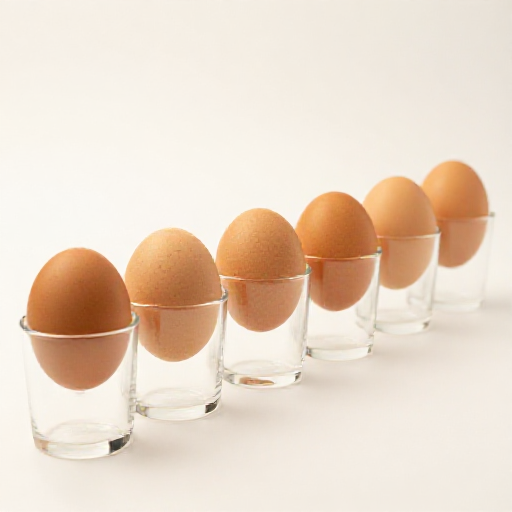
## Why It Works
The float test and storage timeline are the same phenomenon read two different ways. As an egg ages, moisture and CO2 escape through the porous shell, replaced by outside air. That expanding air cell is what you're measuring in the water. Flat on its side: very little air, very fresh. Tilted: a few weeks old, still excellent. Standing upright: older, but the air cell is now large enough that the shell peels easily after hard-boiling. Floating: the air cell is enormous and the egg has been aging past its useful point.
## How to Apply This
1. Fill a container deep enough to fully submerge an egg.
2. Lower each egg gently and observe its resting position.
3. Sort accordingly:
- **Flat on bottom** — less than 2 weeks old. Best for poaching, frying, soft-boiling. Freshness is an asset here.
- **Tilted at 30–45 degrees** — 2 to 3 weeks old. All-purpose. Fine for everything.
- **Standing upright on the bottom** — 4 to 5 weeks. Use for hard-boiling. Do not poach — the white will be watery.
- **Floating** — discard or crack and smell before deciding. If it smells fine, use in a baked good where freshness matters least.
4. If you have a mixed batch of eggs with no date, this sorts them into a use-order sequence.
## Pro Tips
- "Floating" is not the same as "rotten." It means old. Smell the egg after cracking — if it's fine, it's fine.
- Humidity affects results slightly. The test is most reliable in cold water at refrigerator temperature.
- Commercially washed eggs age faster because the USDA washing process removes the bloom (cuticle), which seals the shell pores. Unwashed farm eggs age more slowly.
## When to Use This
When buying farm eggs without a pack date, when you've mixed cartons in the fridge, or when you want to plan which eggs to use in which recipe this week. Fresh eggs for Sunday poached eggs, older eggs for Tuesday hard-boiled lunches.