## Why It Works
The air cell in a chicken egg is always located at the blunt (wide) end. When an egg is stored blunt-end-down, the yolk drifts toward the air cell due to gravity, getting closer to the shell and to the bacteria-prone air pocket. Pointy-end-down storage uses gravity in your favor: the yolk stays suspended in the center of the albumen, cushioned by the thick white, as far from the air cell as possible. The result is a more shelf-stable egg with a centered yolk that looks better when sliced or fried.
## How to Do It
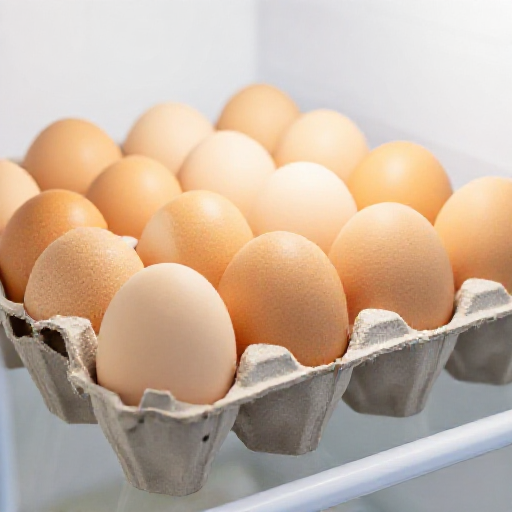
1. When transferring eggs from the store carton to another container, place them pointed-end down.
2. If storing in the original carton, flip it upside down in the refrigerator. Commercial cartons are molded pointy-end-down already, so the inverted carton sits correctly.
3. Keep them in the back of the middle shelf, not the door — the temperature is more stable there.
## Pro Tips
- This matters more for eggs you plan to store for two weeks or longer. For eggs you'll use in three days, orientation makes negligible difference.
- Pointy-end-down storage is particularly useful for eggs you plan to hard-boil for deviled eggs — a centered yolk means a centered cavity.
- Do not wash eggs before storing. The bloom (cuticle) is a natural antibacterial seal over the shell pores. Washing it off makes eggs age faster.
## When to Use This
Any time you're buying eggs in advance of a busy week or stocking up. If you have a dedicated egg tray in the fridge, flip the orientation of whatever holder you're using. Small habit, measurable improvement in egg life.