## Why It Works
Egg proteins denature (cook) rapidly above about 160°F. If you add raw eggs directly to a hot liquid, the surface of the egg hits high heat and scrambles before it can mix in. Tempering solves this by gradually raising the egg's temperature using small additions of the hot liquid. By the time the egg mixture goes into the pot, it's warm enough that it won't shock when added to the full hot liquid — the proteins heat slowly and evenly, producing a smooth, creamy result instead of sweet scrambled eggs.
## How to Do It
1. Whisk eggs (or yolks) in a separate bowl with your recipe's sugar, if any.
2. Heat your milk or cream in a saucepan until it steams and just begins to simmer. Remove from heat.
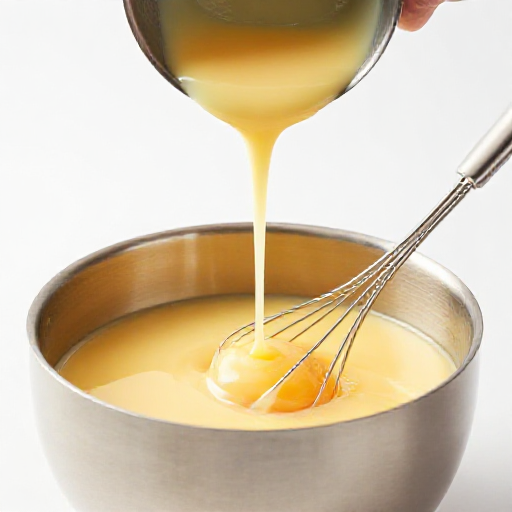
3. Start ladling the hot liquid into the egg bowl one tablespoon at a time, whisking constantly after each addition. The first few tablespoons are the critical ones — they raise the egg temperature gradually.
4. After adding a quarter to a third of the total hot liquid, the egg mixture is warm enough to handle the rest.
5. Pour the warm egg mixture back into the saucepan with the remaining liquid, whisking as you go.
6. Return to medium-low heat and cook, stirring constantly, until the mixture reaches your target thickness.
## Pro Tips
- Never stop whisking during tempering. The moment you pause, the eggs at the bottom of the bowl overheat.
- If you see bits of cooked egg forming, strain immediately through a fine mesh sieve. Caught early, a curdled custard base can still be saved.
- This technique applies to crème brûlée, pastry cream, lemon curd, hollandaise, and any sauce or dessert with eggs cooked in a hot liquid.
## When to Use This
Every time you make a custard, lemon curd, or egg-based sauce. No exceptions. Skipping the temper step is the number one reason home cooks end up with scrambled dessert.