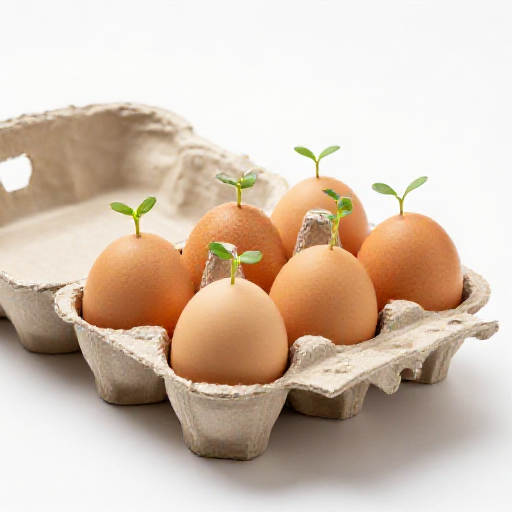
## Why It Works
Cardboard egg cartons are made from recycled paper pulp — organic material that decomposes readily in moist soil, typically within a few weeks. This means you can plant the seedling, carton cup and all, without disturbing the root system. Root disturbance is the main cause of transplant shock, particularly in plants like squash, cucumbers, and melons that develop a taproot early. The decomposing cardboard also adds minor organic matter to the soil.
## How to Do It
1. Collect cardboard (not plastic or foam) egg cartons.
2. Use a toothpick or pin to poke a small drainage hole in the bottom of each cup.
3. Fill each cup with seed-starting mix, not garden soil. Garden soil is too heavy and may carry disease.
4. Plant one seed per cup at the depth specified on the seed packet.
5. Water gently — the cardboard will absorb some moisture and stiffen.
6. Place in a warm, bright location or under grow lights.
7. When seedlings have their first true leaves and outdoor conditions are ready, tear the carton into individual cups. Score or tear the sides of each cup slightly to allow roots to break through more easily.
8. Plant the whole cup directly in the ground at the correct depth.
## Pro Tips
- Don't let the cardboard dry out between waterings — dry cardboard creates a moisture barrier that prevents roots from penetrating the sides.
- Keep the planted cups on a tray to catch drainage and make moving them easier.
- Styrofoam and plastic cartons are not suitable — they don't decompose and must be removed at transplanting, which defeats the purpose.
## When to Use This
Starting seeds indoors 4 to 8 weeks before the last frost date. Particularly useful for plants that don't like transplanting: cucumbers, squash, melons, and any plant that develops a deep taproot quickly.