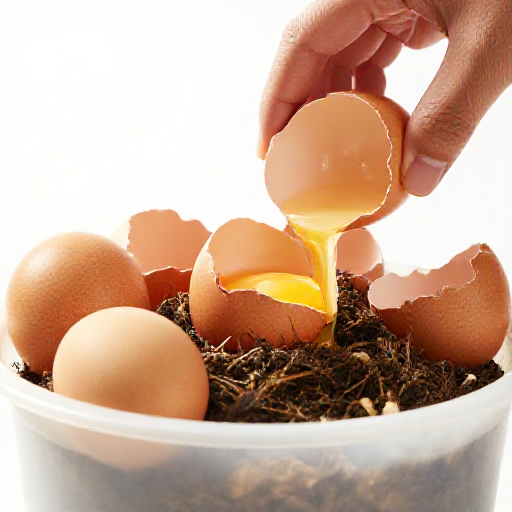
## Why It Works
Healthy compost needs a balance between carbon-rich brown materials (dried leaves, cardboard) and nitrogen-rich green materials (food scraps, fresh clippings). Green materials tend to be acidic as they decompose, which can slow microbial activity if pH drops too low. Eggshells are alkaline — they neutralize excess acidity and bring compost pH toward the neutral range where decomposers work most efficiently. They also add calcium to the finished compost, which benefits plants when the compost is applied.
## How to Do It
1. Rinse eggshells briefly to remove egg residue — egg residue smells as it decomposes and attracts pests.
2. Crush shells before adding. Whole shells can sit in compost for years without breaking down. Crushed shells decompose in months; powdered shells in weeks.
3. Add to the compost bin in layers with your other materials. No special placement required.
4. Turn the pile as normal.
5. The shells will have fully incorporated by the time the compost is ready to use.
## Pro Tips
- Don't worry about adding too many. Unlike soil, where you might over-apply and raise pH too high, compost buffers well and it's very hard to add so many shells that pH becomes problematic.
- The small amount of white remaining inside shells contributes nitrogen. The shell exterior contributes calcium and alkalinity.
- Coarsely crushed shells take a full composting cycle; powdered shells fully incorporate within a few weeks.
## When to Use This
Every time you crack eggs — just rinse and toss them in the compost bin. No analysis required. Over a year of cooking, an average household will have added a meaningful amount of calcium to their compost without any extra effort.