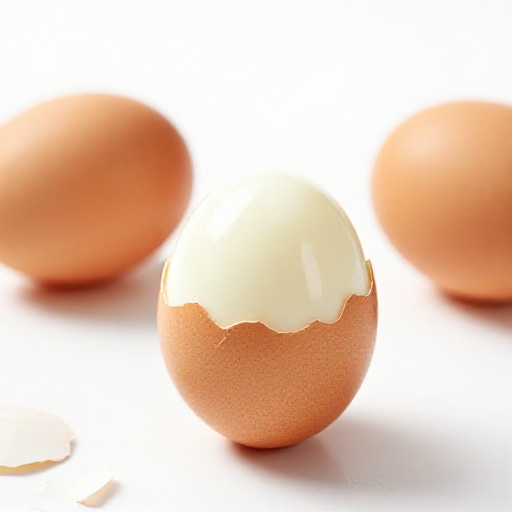
## Why It Works
Fresh eggs are difficult to peel for a chemical reason: at low pH (acidic conditions), the proteins in the egg white bond tightly to the inner membrane of the shell. As eggs age, CO2 escapes through the shell and the pH of the white rises — more alkaline conditions weaken that bond. Baking soda (sodium bicarbonate) raises the pH of the boiling water, which transfers into the white during cooking and achieves the same effect as aging the egg for several weeks. The membrane peels away cleanly.
## How to Do It
1. Fill a pot with enough water to fully submerge your eggs.
2. Add 1/4 teaspoon of baking soda per quart of water. Stir briefly.
3. Bring to a boil over medium-high heat.
4. Gently lower eggs into the boiling water using a spoon or spider. Don't drop them — cracked shells defeat the purpose.
5. Boil for your target time: 6 minutes for soft-boiled, 10 minutes for jammy, 12 minutes for hard.
6. Transfer immediately to an ice bath. Leave for at least 5 minutes.
7. Peel: tap the wide end (air cell side) on the counter, then roll gently to crack the shell all over. Start peeling from the wide end where the membrane is loosest.
## Pro Tips
- Don't overdo the baking soda. More than 1/2 tsp per quart and you'll taste a slight mineral edge in the white.
- The ice bath does two jobs: it stops carryover cooking and causes the white to contract away from the shell, which helps peeling further.
- This technique is especially valuable when using fresh farm eggs, which are notoriously hard to peel without the pH trick.
## When to Use This
Any time you're hard-boiling eggs for deviled eggs, egg salad, or meal prep — situations where you need clean, undamaged whites. The standard method produces acceptable eggs; this method produces eggs that peel in under 20 seconds.