## Why It Works
The scrambled egg debate — water vs. milk — comes down to what each liquid does to egg protein. Milk contains proteins (casein and whey) that denature alongside egg proteins in the heat. When you add milk, you're essentially adding more proteins that cook and tighten simultaneously with the egg. The result is a denser, slightly stiffer curd. Water, on the other hand, creates steam as it heats. Those steam bubbles expand inside the egg mixture, creating air pockets and a lighter, fluffier texture before evaporating away entirely.
## How to Do It
1. Crack eggs into a bowl. Add 1 tablespoon of water per 2 eggs.
2. Beat well with a fork until fully combined and slightly frothy.
3. Heat a pan over medium-low heat. Add butter and let it melt until foamy but not browning.
4. Pour in the egg mixture.
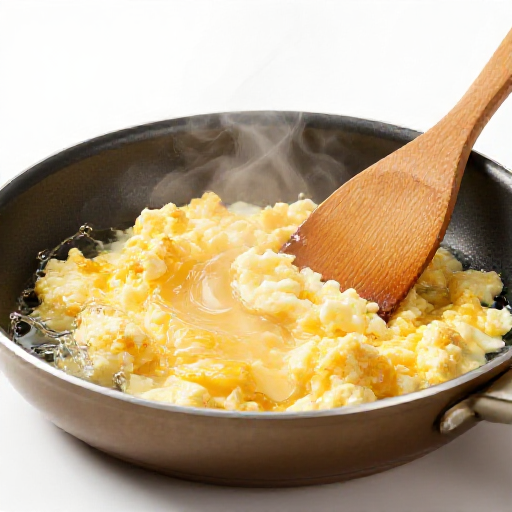
5. Use a spatula to gently fold the eggs from the outside edge toward the center as large curds form.
6. Pull the pan off the heat when eggs are just barely underdone. Carryover heat finishes them.
## Pro Tips
- Don't add salt before cooking — salt draws moisture out of the eggs before they hit the pan and can make them weep. Season at the end.
- Cream is a legitimate alternative if you want rich, dense scrambled eggs intentionally. Just understand you're choosing that texture.
- The temperature matters as much as the liquid. Low and slow produces soft, creamy curds regardless of what you add. High heat produces tough eggs no matter what.
## When to Use This
Every time you make scrambled eggs and want the lighter, fluffier texture. The milk habit is deeply ingrained in most home cooks — switching to water is a meaningful upgrade with zero downside.