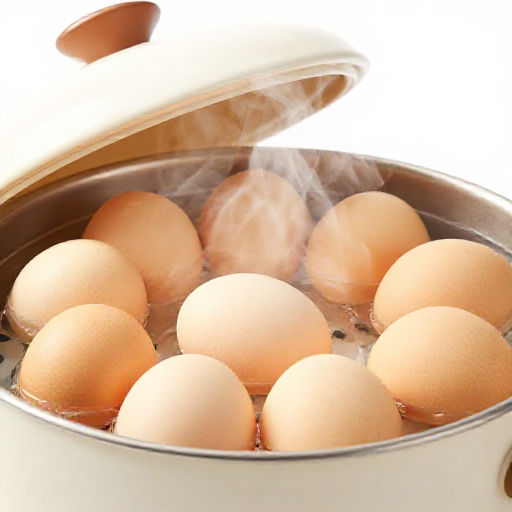
## Why It Works
Boiling eggs in water means the eggs are subject to convection currents that knock them around, uneven heat distribution, and temperature variations based on how hard you're boiling. Steam eliminates those variables. Steam at sea level is always 212°F. The eggs sit still in the basket, surrounded by consistent heat. The result is more uniform cooking and, critically, easier peeling — steam cooking produces slightly higher shell temperature relative to the interior, which creates a better separation between white and membrane.
## How to Do It
1. Place a steamer basket in a pot. Add enough water to come just below the basket bottom — about 1 inch.
2. Bring the water to a boil over high heat with the lid on.
3. Once boiling, carefully place eggs in the steamer basket. Replace the lid immediately.
4. Reduce heat to medium (you want a steady steam, not a raging boil evaporating all your water).
5. Steam times:
- Soft-boiled (runny yolk): 6 minutes
- Jammy (slightly set, custard-like): 9 minutes
- Hard-boiled: 12 minutes
6. Transfer immediately to an ice bath.
## Pro Tips
- Check the water level midway through for large batches. Running out of water and scorching the pot is the main failure mode.
- Start timing from the moment the lid goes back on, not from when you put the eggs in.
- This method works especially well at high altitude, where water boils below 212°F. Steam temperature stays consistent because it's generated by boiling water — but the steam itself is still 212°F.
## When to Use This
When you want consistent results without babysitting. Also useful when you're cooking other things and only have one burner free — the steam pot uses minimal space and requires almost no attention once you've started the timer.