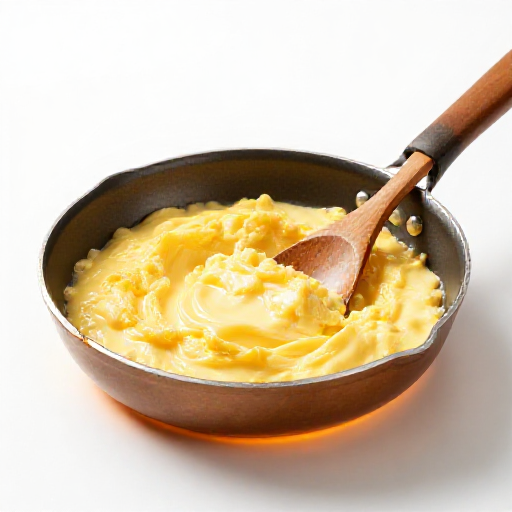
## Why It Works
Egg proteins begin denaturing (unfolding and linking together) at around 145°F and complete that process by about 180°F. High heat drives through this entire range in seconds, producing a tight, rubbery protein network that's squeezed out its moisture. Low heat holds eggs in the 145–165°F range for longer, allowing large, soft curds to form and maintain their moisture. The result is fundamentally different in texture — silky and custard-like rather than dry and bouncy.
## How to Do It
1. Beat eggs well. Add a tablespoon of water per two eggs, a pinch of salt.
2. Heat a pan over medium-low. Add a generous knob of butter — more than you think.
3. Pour in the eggs. The pan should be warm enough that the eggs start setting slowly on contact, but not sizzling aggressively.
4. Using a rubber spatula, push the eggs from the outside edge toward the center in slow, deliberate folds. Let them set slightly between each fold.
5. Scrape the bottom continuously. You're managing heat, not rushing it.
6. When the eggs look about 80% set — still slightly wet and glossy — pull the pan off the heat. Fold once more. The residual heat finishes them.
7. Season and plate immediately.
## Pro Tips
- French-style scrambled eggs (even lower heat, constant stirring with a spatula) take 8 to 10 minutes and produce an almost liquid curd. Extraordinary, but requires full attention.
- A double boiler — bowl over simmering water — gives you even more control than a direct burner. Used in restaurant kitchens for precision scrambling.
- Crème fraîche or cream cheese stirred in at the end adds richness and also helps stop the cooking by cooling the mass slightly.
## When to Use This
Any time you're making scrambled eggs as the feature, not as an afterthought. Weekend brunch, a solo dinner, any time you have five minutes to give eggs the attention they deserve.