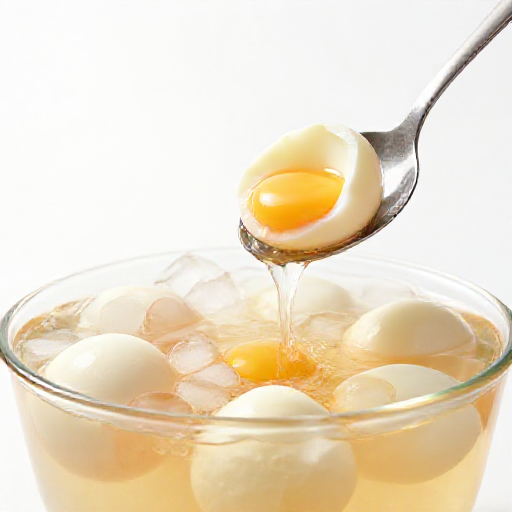
## Why It Works
An egg pulled from boiling water is still cooking. The shell and white have absorbed significant heat, which continues conducting toward the center of the yolk. Depending on egg size and how long it was in the water, this carryover cooking adds 1 to 3 minutes of effective cook time after removal. For soft-boiled and jammy eggs, this is the difference between nailing the texture and missing it. An ice bath shocks the egg with cold, stopping heat transfer almost immediately and setting the texture at exactly the point you want.
## How to Do It
1. Prepare the ice bath before you start boiling: fill a bowl with cold water and a generous amount of ice.
2. When the timer goes off, use a slotted spoon or spider to transfer eggs directly from boiling water to ice bath. Work quickly.
3. Leave eggs in the ice bath for at least 5 minutes. For hard-boiled eggs, 10 minutes is better — it also helps the shell contract and peel more cleanly.
4. Remove, dry, and store or use.
## Pro Tips
- Running cold tap water is not a substitute. Tap water isn't cold enough to stop carryover cooking quickly — it slows it, it doesn't stop it. Use actual ice.
- The grey-green ring around the yolk of an overcooked hard-boiled egg is iron sulfide, formed when iron in the yolk reacts with sulfur in the white at high temperatures. An ice bath prevents it.
- For precision soft-boiled eggs: cook 6 minutes 30 seconds in boiling water, ice bath 5 minutes. Consistent every time.
## When to Use This
Any time you boil eggs. There is no downside to using an ice bath and significant upside — better texture, easier peeling, no overcooked yolks.